Why were Adam and Eve told not to eat of the tree of knowledge of good and evil?

February 22, 2026
The theme of ‘temptations’ runs across all three readings of today. And I have spoken about Jesus’ temptations in a couple of earlier blogs. (Jesus' temptation and Shortcuts to the Kingdom). But the first story of temptation that we read about in the Bible, is found in the first reading of today, and is one that not just Christians, but many others too are familiar with. And the most obvious question that arises when one reads this account is this: Why would Adam and Eve have been prohibited from eating of the tree of life and the tree of the knowledge of good and evil? Isn’t knowing good from evil actually a good quality that God would have wanted Adam and Eve to have?
To answer this we must acknowledge first of all that this is not a historical story in our understanding of ‘history’ - a theme I have explored in various earlier blogs. Today’s first reading actually underscores this idea, for most Christians do not realize that today’s first reading is part of a second Creation story that is found in the first book of Genesis. In the first creation story (Gen 1:1 to 2:3) man is created last, while in this story (from Gen. 2:4) man is created first. The fact that there are two such stories of Creation, one immediately after the other, only further confirms that neither is to be taken as historical.
A basic principle in reading the Scriptures in any religion, at least according to mainline Christian theology, is that all Scriptures are articulations of God-inspired experiences mediated through human vessels. Therefore, in order to interpret this story, we need to ask ourselves : What question/experience was this section of the Book of Genesis responding to, or communicating to us, through the story of the temptation of this first ‘mythological’ couple.
In today’s first reading, there are two trees in the middle of the Garden - the tree of life, and the tree of the knowledge of good and evil. However, the serpent in the story seems to focus on the second tree, and it is in this context that I asked earlier: Why was the eating of the tree of the knowledge of good and evil forbidden?
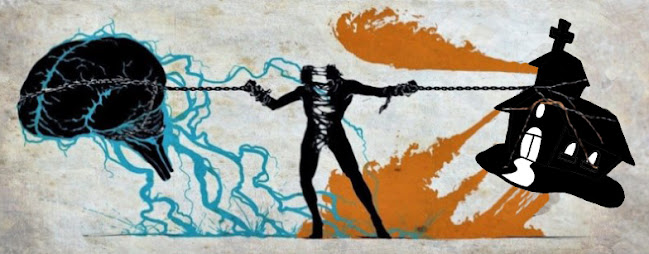
One explanation is that the biblical writer is raising a question that many Jews may have been struggling with at that time, namely whether human beings can claim the right to moral autonomy, the right to decide what is good and what is evil, rather than submitting blindly to God’s authority and trusting it. This has long been a dilemma for those following any religion - and still is. How much should we blindly trust our scriptures, our priests our gurus, our religious traditions and how much should we think for ourselves, especially when it comes to moral issues? In other words is it right for human beings to take on the role of moral judge, with the tree representing the boundary between submission to God and the assertion of human self-judgement? And the answer for the writer of the Genesis story is clearly that submission to God must take priority over one’s own individual assessment. And this conclusion of the writer is in fact the underlying theology that runs through most of the Old Testament, when Yahweh demands from the Jews absolute loyalty and obedience to his commands. But that is not the end of the Biblical narrative.
Because if the Bible is the story of the human pilgrimmage towards God, as experienced by its inspired and varied authors (as explained in various other blogs), then, of course, we have to see where that pilgrimmage takes us. For as we come closer to the New Testament we hear a different voice arising, that begins to speak of a time that is coming when Yahweh will write his commands on human hearts (Jeremiah 31:33) - in other words, that human beings will know what is good and evil in their own hearts. And then, when we come to the New Testament, this earlier dichotomy between God and human beings is shattered. For in Jesus we find a complete oneness between God and human beings so that Jesus proclaims that the Father and he are one (John 10:31-38), and later prays that the same one-ness be also granted to his disciples (John 17:20-23). Paul, in the second reading, speaks of the fracture between God and human beings caused by Adam and we are then healed by the oneness between God and human beings that Jesus brings.
So, in Jesus, this dichotomy between obeying God or obeying one’s truest self, in deciding what is right and wrong, is bridged, as long as we are one with the Father. And this is what Jesus means when he teaches that the Kingdom of God is within us. For this oneness with God can be experienced by all of us, though it is something we have to strive towards all our lives. And in the Christian tradition this striving is primarily through love of the neighbour. That perhaps is part of the good news, namely that although we do not always know good from evil, although we cannot always claim moral autonomy, if we strive towards becoming one with God, irrespective of the religion we practice, the difference between good and evil will be written in our hearts.
So we might conclude that the command not to eat of the tree of the knowledge of good and evil was part of the earliest stage of the human pilgrimmage towards God, a stage that was finally completely upended by Jesus and all those who live in harmony with God. This is similar to children growing up - for in their childhood we expect them to obey us as we believe they are not yet mature enough to make independent decisions. However, as they grow older, good parents will encourage them to start developing their own sense of right and wrong, until they become adults when they will decide for themselves. In other words, it was because human beings, represented by the mythological Adam and Eve, were like children who often want the freedom to do as they will, but are not yet mature enough to be allowed to do so, that they bear the consequences of wrong decisions. But over the centuries, God helps them grow and develop, promising them that one day they will know what is right and wrong in their own hearts. And finally, God gives them an example of one who demonstrates this truth in his own life, of what it means to be so in tune with God, that he, Jesus can even re-interpret and articulate what is the value entrenched in the older commands that they were blindly following. And so, as we heard in last Sunday’s Gospel, he confidently teaches his listeners, ‘’You have heard that it was said… but I say to you…’’.
Therefore the question we have to ask ourselves is: ‘’Where have we reached in our pilgrimmage towards one-ness with God?’’ And since most of us would readily admit that we are only ‘halfway’ on the journey towards such one-ness with God, we can and perhaps must use the teachings of the Bible, and of the Church, as guideposts to help us, especially when our understanding of what is right and wrong may be compromised by our own inner urges and conveniences. Jewish rabbinical interpretations of this story in Genesis consider eating of the tree of knowledge of good and evil as a necessary step in our journey towards moral adulthood. So while we know we are not holy enough to be fully morally autonomous, we cannot escape the rigors of the journey. We cannot, and must not, remain in moral childhood, refusing to move towards maturity, by just following the rules laid down for us. And it is because individual Christians, over the centuries, have chosen to challenge Church moral commands out of the depths of their experience of God, that the CHURCH itself has continued to grow and refine and even correct its own teachings over the centuries.
First Reading: Genesis 2: 7-9; 3: 1-7
Then the Lord God formed man from the dust of the ground and breathed into his nostrils the breath of life, and the man became a living being. And the Lord God planted a garden in Eden, in the east, and there he put the man whom he had formed. Out of the ground the Lord God made to grow every tree that is pleasant to the sight and good for food, the tree of life also in the midst of the garden, and the tree of the knowledge of good and evil.
Now the serpent was more crafty than any other wild animal that the Lord God had made. He said to the woman, “Did God say, ‘You shall not eat from any tree in the garden’?” The woman said to the serpent, “We may eat of the fruit of the trees in the garden, but God said, ‘You shall not eat of the fruit of the tree that is in the middle of the garden, nor shall you touch it, or you shall die.’ ” But the serpent said to the woman, “You will not die, for God knows that when you eat of it your eyes will be opened, and you will be like God, knowing good and evil.” So when the woman saw that the tree was good for food and that it was a delight to the eyes and that the tree was to be desired to make one wise, she took of its fruit and ate, and she also gave some to her husband, who was with her, and he ate. Then the eyes of both were opened, and they knew that they were naked, and they sewed fig leaves together and made loincloths for themselves.
Second Reading: Romans 5: 12-19 or 5: 12, 17-19
Therefore, just as sin came into the world through one man, and death came through sin, and so death spread to all because all have sinned— for sin was indeed in the world before the law, but sin is not reckoned when there is no law. Yet death reigned from Adam to Moses, even over those who did not sin in the likeness of Adam, who is a pattern of the one who was to come.
But the free gift is not like the trespass. For if the many died through the one man’s trespass, much more surely have the grace of God and the gift in the grace of the one man, Jesus Christ, abounded for the many. And the gift is not like the effect of the one man’s sin. For the judgment following one trespass brought condemnation, but the gift following many trespasses brings justification. If, because of the one man’s trespass, death reigned through that one, much more surely will those who receive the abundance of grace and the gift of righteousness reign in life through the one man, Jesus Christ.
Therefore just as one man’s trespass led to condemnation for all, so one man’s act of righteousness leads to justification and life for all. For just as through the one man’s disobedience the many were made sinners, so through the one man’s obedience the many will be made righteous.
Gospel: Matthew 4:1-11
Then Jesus was led up by the Spirit into the wilderness to be tested by the devil. He fasted forty days and forty nights, and afterward he was famished. The tempter came and said to him, “If you are the Son of God, command these stones to become loaves of bread.” But he answered, “It is written,
‘One does not live by bread alone,
but by every word that comes from the mouth of God.’ ”
Then the devil took him to the holy city and placed him on the pinnacle of the temple, saying to him, “If you are the Son of God, throw yourself down, for it is written,
‘He will command his angels concerning you,’
and ‘On their hands they will bear you up,
so that you will not dash your foot against a stone.’ ”
Jesus said to him, “Again it is written, ‘Do not put the Lord your God to the test.’ ”
Again, the devil took him to a very high mountain and showed him all the kingdoms of the world and their glory, and he said to him, “All these I will give you, if you will fall down and worship me.” Then Jesus said to him, “Away with you, Satan! for it is written,
‘Worship the Lord your God,
and serve only him.’ ”
Then the devil left him, and suddenly angels came and waited on him.

Comments
Post a Comment