Is my Religion built on crutches?

February 8, 2026
Can salt ever lose its saltiness? Scientifically, the answer is that Sodium Chloride, the essence of salt, can never lose its saltiness, but when it is mixed with other impurities and then is exposed to moisture, water etc, (for it is hygroscopic, i.e. attracts water, or for other reasons), then the water can leach away the sodium chloride, and the remaining powder that seems like salt is no more salty.
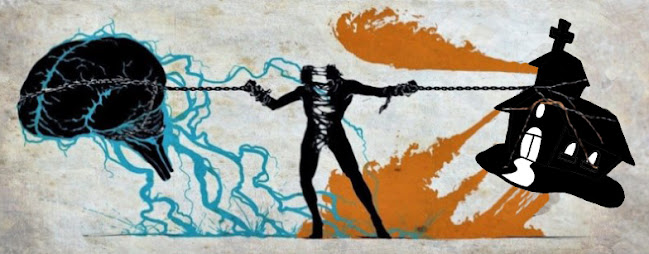
Is that the same with our practice of religion? - that our following of the essential message of Jesus is mixed up with a lot of accretions that are naturally added on to it over the centuries, - rituals, dogmas, structures, rules, and the like - all of which are meant to be helping us to follow the teachings of Jesus. And somehow, we begin to focus on those accretions, and then without our knowing it, sometimes all that remains are those visible or tangible accretions, which we then fight to defend and retain, while unknowingly, the original inspiration/ message has leached away.
The first reading seems to be saying exactly that. In the passage just before today’s first reading we have Isaiah lamenting on behalf of YAHWEH: Is such the fast that I choose, a day to humble oneself? Is it to bow down the head like a bulrush and to lie in sackcloth and ashes? Will you call this a fast, a day acceptable to the Lord? (Isaiah 58 5). And perhaps similar questions could be asked of us who fulfil all our Lenten fast and abstinence rules, make many sacrifices in accordance with various novenas or promises made to God, who follow all the Church rules, firmly believe all the dogmas we have been taught, and the like. But then as the first reading reminds us: Is not this the fast that I choose: Is it not to share your bread with the hungry and bring the homeless poor into your house; when you see the naked, to cover them and not to hide yourself from your own kin?’’ For ‘’If you remove the yoke from among you, the pointing of the finger, the speaking of evil, if you offer your food to the hungry and satisfy the needs of the afflicted’’ then only will you be pleasing to God.
This, of course, happens in all religions. So, participating regularly in the Sacraments in Catholicism gradually becomes central to many Catholics; going to Mecca for the Haj pilgrimmage becomes central to Muslims; fulfilling certain rituals at various life milestones (e.g. birth, adolescence, marriage, death etc) becomes all that is essential for many Hindus; and similarly in all religions. All these allow a complacency to creep in, and we begin to believe that following these ‘accretions’ with diilgence, proves that we are faithful members of our respective religions
I remember a parable my teacher, Tony D’mello (author of The SONG OF THE BIRD ), once told me, that may have meaning for us in this context today. I do not have his exact words, but this is his story as I recall it.
There once was a kingdom, ruled by a very wise king. One day, due to an unfortunate accident, the king broke his legs, and could no more walk. But being an intelligent and inventive king, he thought and thought and finally invented crutches for himself, with the help of which he could continue to ‘walk’ around. Gradually he realized that having crutches brought with it certain additional advantages. He could use the crutches as extended arms, for instance to knock fruit off trees, and even to defend himself if attacked. And so he thought it would be a good idea that all his subjects also make and use crutches. The idea caught on, and the use of crutches spread in his kingdom. Generations passed, and now the crutch fad had become the norm, with crutch factories by the dozens, crutch competitions, and crutch designers, and so on. After all, who needed legs, when one had such versatile crutches to walk with!
A century later, some young teenager, watching animals walking without crutches, and seeing his own legs hanging uselessly from his body, asked himself, as youngsters will: ‘’Could I perhaps walk without crutches, like the animals? How much better would that be as I would not be dependent on these artificial crutches! I could still keep the crutches for whatever additional tasks I wanted, but I would not be dependent on crutches’’.
Soon the idea spread like wildfire, especially among the young who often like to rebel against older customs. And so many elders in the kingdom came to the intelligent king of that time, and informed him of this dangerous idea spreading among the youth. There were many from the business community too who came, and from those who organized the sports competitions, and from many who were employed in the crutch industry, and many others who came and complained about this new-fangled and preposterous idea being spread by the youth. They spoke of it as a pernicious idea that would destroy the wisdom of their traditions and their way of life.
The king thought long over this challenge to traditional wisdom and came to the conclusion that trying to suppress this idea would only make it more attractive to youngsters and other rebels, because it would be like ‘forbidden fruit’ which is always more attractive. So he hit upon an idea. He announced to the kingdom that he had heard about this new idea of a world where human beings did not have to use crutches to walk, and he was inclined to give those who propounded it a chance to prove the truth of what they were spreading. So he organized a huge event, where everybody was invited, and at that event he requested the leaders of this new movement to demonstrate the truth of their teaching.
The entire kingdom gathered, and the leaders of the crutchless gospel were brought to the centre, where they came walking on their crutches. And the king asked them to demonstrate to everybody the truth of their teaching, promising them, that if they could prove it, then he himself would support them and make it a policy for the entire kingdom.
Everybody watched with bated breath. The young leader of the crutch movement accepted the challenge, and came forward on his crutches. Standing in the middle of that vast crowd, he threw aside one crutch, and took one step forward, throwing off the other crutch as he did so - and collapsed on to the ground, for his limbs were not strong enough to take his weight. A sign of relief passed through all the crowd. ‘See’, they said among themselves, ''Our ancestors were right. We cannot walk without crutches''.
First Reading: Isaiah 58:7-10
Is not this the fast that I choose:
Is it not to share your bread with the hungry
and bring the homeless poor into your house;
when you see the naked, to cover them
and not to hide yourself from your own kin?
Then your light shall break forth like the dawn,
and your healing shall spring up quickly;
your vindicator shall go before you;
the glory of the Lord shall be your rear guard.
Then you shall call, and the Lord will answer;
you shall cry for help, and he will say, “Here I am.”
If you remove the yoke from among you,
the pointing of the finger, the speaking of evil,
if you offer your food to the hungry
and satisfy the needs of the afflicted,
then your light shall rise in the darkness
and your gloom be like the noonday.
Second Reading: 1 Corinthians 2:1-5
When I came to you, brothers and sisters, I did not come proclaiming the testimony of God to you with superior speech or wisdom. For I decided to know nothing among you except Jesus Christ and him crucified. And I came to you in weakness and in fear and in much trembling. My speech and my proclamation were made not with persuasive words of wisdom but with a demonstration of the Spirit and of power, so that your faith might rest not on human wisdom but on the power of God.
Gospel: Mathew 5:13-16
“You are the salt of the earth, but if salt has lost its taste, how can its saltiness be restored? It is no longer good for anything but is thrown out and trampled under foot.
“You are the light of the world. A city built on a hill cannot be hid. People do not light a lamp and put it under the bushel basket; rather, they put it on the lampstand, and it gives light to all in the house. In the same way, let your light shine before others, so that they may see your good works and give glory to your Father in heaven.

Comments
Post a Comment