How we love to limit God

December 7, 2025
Today’s first reading and the Gospel reading speak of two prophets who came before Jesus, Isaiah and John the Baptist, who both pointed the Jews to the Messiah that God had promised them.
The first reading from the book of Isaiah conveys quite a different image of the kind of God’s reign that this Messiah would inaugurate, different from what the Israelites had come to expect based on their experience from the time of Moses. That ‘Mosaic’ experience was one of a powerful Yahweh who smote their enemies in order to save them from those who oppressed them. Rather, this new reign of God would embrace the whole world, not just the Jews, and both the evil and the good would live in harmony together, for ’the wolf shall live with the lamb; the leopard shall lie down with the kid; the calf and the lion will feed together, and a little child shall lead them’’. In fact unlike their most famous King David, also God’s chosen one, this new representative of God, would not be a conquering hero, but a suffering servant (Isaiah 53), who through his suffering would heal the world so that human beings from all nations would no more ‘hurt or destroy, on all my holy mountain, for the earth will be full of the knowledge of the Lord as the waters cover the sea’’.
And when we come to the story of John the Baptist that we find in today’s Gospel, and compare him with Jesus, we find they both offer us a stark study in contrasts. John’s theology was clearly one of God as the eternal judge who would come to punish those who had sinned, while Jesus taught of an ABBA Father who forgave again and again. John spoke of pleasing God by fulfilling the commandments found in the Torah, while Jesus spoke of entering the kingdom of heaven only if one loved one’s neighbour.
And yet, though John and Jesus preached different ‘Gods’, they both seemed to have a great appreciation of each other, with John pointing Jesus out to the Jews as their expected Messiah, and Jesus stating that John was the greatest ever to be born of a woman. Similarly, the very different descriptions of how God works in our world that is found in the book of EXODUS (the Mosaic experience), the first and second books of Samuel (the Davidic experience), and what we have just read in the book of Isaiah (just to take a few examples), are all found in the same Old Testament and are all considered part of the revelation of God.
The fact that the Bible, the book that we refer to as the Word of God, offers so many varied images of ‘God’ and the ‘Kingdom of God’ should make us pause and reflect on how we arrive at our beliefs about God. The reality is that our Biblical faith has journeyed through many and various images of God’s ways of working with human beings, so much so that we have now officially understood and accepted that even the Scriptures of other religions that paint different images are all possibly different pictures of that same God.
This respect for various interpretations/images of God even within one’s own tradition is also found in all the major religions. For instance, from long before Jesus’ time, the Jewish Sanhedrin (which included Jewish religious scholars, including the Pharisees and Sadducees), met on a regular basis to debate the interpretation of the Jewish Torah. In fact while the Torah is the centrepiece of the Jewish Scriptures, the TALMUD, which has much value for Jewish practice, is the compilation of the most important rabbinic discussions, debates and interpretations of the Torah.
Similar traditions of debate and discussion are also reflected in the various Shastras in the Hindu tradition, which are authoritative texts that interpret the Hindu scriptures as they are offered by different schools or Darshanas (perspectives) of Hindu thought. Even the Upanishads, which is itself an important part of Hindu scriptures, reflects these debates and differences in views about Ultimate Reality. In Islam too, right from its establishment till today, scholars regularly engaged in discussions and debates on points of difference in Islamic law and this gave birth to what is known as the Islamic Fiqh, which refers to the interpretation and application of the Sharia (Islamic law) to daily life. Similarly, when a point of dispute about religious doctrine or practice comes up, a fatwah (a non-binding legal opinion or ruling) may be issued by a qualified Islamic scholar, and such a ruling may or may not be agreed to by another Islamic school of thought.
The Christian Bible itself offers 4 different versions of the Gospel and there are places where they even contradict each other. Thus the two genealogies of Jesus as listed out in Mathew (Ch.1) and Luke (Ch. 3) do not match each other. Divorce is absolutely proscribed in the Gospels of Luke and Mark (Luke 16: 18, Mark 10: 11-12) but Mathew (Mathew 5:32 and 19:9) allows an exception where it is allowed. Luke is clear that the rich are damned and the poor are blessed, (Ch.6) but Mathew (Ch. 5) does not speak of the rich being damned, and says it is enough to be poor in spirit. Similarly Paul (Ephesians 2: 8-9) and James (James 2:18) have different points of view on the importance of ‘faith’ and ‘works’. In addition, in the history of our Church we read about the many and various debates on doctrine that were often settled by the church leaders meeting in Councils that eventually chose one teaching over another, or by various Popes issuing teachings in their respective Encyclicals (all of which form the Tradition of the Church), and then having even these teachings being modified, (even contradicted?) over the centuries.
In a sense, the fact that we are and will continue to be always growing in our understanding of God, is inevitable, for how can God be contained or limited to any one human expression, or even human imagination as a whole. In fact, I would suggest that the Trinitarian doctrine in Christianity that speaks of three distinct persons in one God, reflects the reality that even Christians believe that Jesus, while fully reflecting in a human way God’s word to us, is not able to completely encompass the wholeness of God, which will always remain beyond our wildest comprehensions. It is like looking out at the unbelievably vast universe, or (or multiverses?), and knowing that however much we may understand it ever more and more, there is so much that we do not and perhaps never shall or can, ever fully understand. In the same manner, despite these many debates and interpretations of who God is and how God engages with us, we as a community of the disciples of Jesus, struggle along, make mistakes, fall back, pick ourselves up and through all this still hopefully grow together in faith.
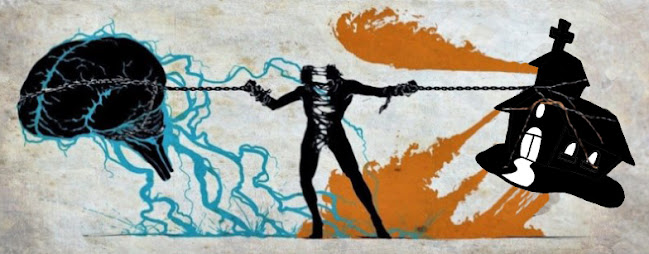
And so we are all called to continue our pilgrimmage towards God, always walking in search of understanding more and more. It seems to me that atheists are those who rebel against our current limited understandings and articulations of who God is, rather than seeing the journey we are on, and being open to ever new understandings and interpretations. And on the other hand, the vast majority of those who believe in God, have a very anthropomorphic and ‘closed’ understanding of God, and are equally not able to see that we are on a journey, and therefore are not open to ever new understandings and interpretations.
In other words, it would seem that we are willing to accept or deny only that kind of God who fits into our own mental image and experience, and are not willing to be open to any other understanding of God aside from this. It is like studying the lead/graphite in a pencil, and insisting we know all about Carbon from that, without realising or being willing to be open to the fact that that same carbon can come in completely and dramatically different crystalline forms such as diamonds, and amorphous forms such as charcoal and coke. As if that is not enough, carbon also has important allotropes, i.e. pure forms of the same element but with a different structure, which include fullerenes, graphene and carbon nanotubes. Even more, any form of life that we know of on Earth cannot exist without Carbon. How limiting then to believe we know all about Carbon because we know much about the lead in a pencil - as the pencil is the only experience we have of Carbon.
Again, this does not mean anything goes. But it is hugely important that we remain open to experiences of God and other articulations of the same, that fall outside of our normal experience, evaluating them in the light of our Christian revelation, but always willing to reflect on them and expand our own limited understanding of God. In fact this has been the history of our Church, for we have clearly moved from a time when we considered all other religions as idolatries or works of the devil, to the stage where the late Pope Francis called other religions as different ways to God, and our present Pope Leo XIV, respectfully visits the Blue Mosque in Turkey a short time ago.
First Reading: Isaiah 11 1-10
A shoot shall come out from the stump of Jesse,
and a branch shall grow out of his roots.
The spirit of the Lord shall rest on him,
the spirit of wisdom and understanding,
the spirit of counsel and might,
the spirit of knowledge and the fear of the Lord.
His delight shall be in the fear of the Lord.
He shall not judge by what his eyes see
or decide by what his ears hear,
but with righteousness he shall judge for the poor
and decide with equity for the oppressed of the earth;
he shall strike the earth with the rod of his mouth,
and with the breath of his lips he shall kill the wicked.
Righteousness shall be the belt around his waist
and faithfulness the belt around his loins.
The wolf shall live with the lamb;
the leopard shall lie down with the kid;
the calf and the lion will feed together,
and a little child shall lead them.
The cow and the bear shall graze;
their young shall lie down together;
and the lion shall eat straw like the ox.
The nursing child shall play over the hole of the asp,
and the weaned child shall put its hand on the adder’s den.
They will not hurt or destroy,
on all my holy mountain,
for the earth will be full of the knowledge of the Lord
as the waters cover the sea.
On that day the root of Jesse shall stand as a signal to the peoples; the nations shall inquire of him, and his dwelling shall be glorious.
Second Reading: Romans 15: 4-9
For whatever was written in former days was written for our instruction, so that by steadfastness and by the encouragement of the scriptures we might have hope. May the God of steadfastness and encouragement grant you to live in harmony with one another, in accordance with Christ Jesus, so that together you may with one voice glorify the God and Father of our Lord Jesus Christ.
Welcome one another, therefore, just as Christ has welcomed you, for the glory of God. For I tell you that Christ has become a servant of the circumcised on behalf of the truth of God in order that he might confirm the promises given to the ancestors and that the gentiles might glorify God for his mercy. As it is written,“Therefore I will confess you among the gentiles
and sing praises to your name”;
Gospel: Matthew 3: 1-12
In those days John the Baptist appeared in the wilderness of Judea, proclaiming, “Repent, for the kingdom of heaven has come near.” This is the one of whom the prophet Isaiah spoke when he said,
“The voice of one crying out in the wilderness:
‘Prepare the way of the Lord;
make his paths straight.’ ”
Now John wore clothing of camel’s hair with a leather belt around his waist, and his food was locusts and wild honey. Then Jerusalem and all Judea and all the region around the Jordan were going out to him, and they were baptized by him in the River Jordan, confessing their sins.
But when he saw many of the Pharisees and Sadducees coming for his baptism, he said to them, “You brood of vipers! Who warned you to flee from the coming wrath? Therefore, bear fruit worthy of repentance, and do not presume to say to yourselves, ‘We have Abraham as our ancestor,’ for I tell you, God is able from these stones to raise up children to Abraham. Even now the ax is lying at the root of the trees; therefore every tree that does not bear good fruit will be cut down and thrown into the fire.
“I baptize you with water for repentance, but the one who is coming after me is more powerful than I, and I am not worthy to carry his sandals. He will baptize you with the Holy Spirit and fire. His winnowing fork is in his hand, and he will clear his threshing floor and will gather his wheat into the granary, but the chaff he will burn with unquenchable fire.”

I'm really shocked by how how much we think we know about God and how little we really know. Thanks for the 3 differing views from Moses, Isaiah and John. I think in our lives we look at God differently in different circumstances. We go God for success in life like Moses, take comfort in Isaiah when we go through tough times and try to live our lives hoping God will judge us for the good we do. There's so much more to discover everyday.
ReplyDelete