Does the New Testament support patriarchy ?

December 28, 2025
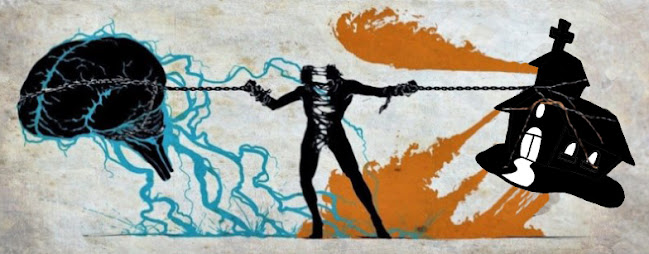
The first and second readings of today give us several rules on how to deal with family - “Help your father in his old age”, “Fathers, do not provoke your children”, “Wives, be subject to your husbands” and so on and so forth. In today’s day and age, however, some of these rules may seem outdated, even problematic, while others are still acceptable. But then isn’t the Bible the Word of God and shouldn’t we therefore follow all these rules as they all form part of what we believe is the Word of God? Or is it OK for us to just cherry pick those rules that make sense to us and dismiss the rest?
How then do we find a way to pass through the horns of this dilemma?
Perhaps this insight may help us. Most ‘successful’ religions (actually all ideologies), are usually based on an insight or what we call, a theology, an understanding of our relationship with God or the Ultimate Reality, that usually stands the test of time and can be applied in all ages. Now, the essential bedrock of Christianity is the insight that the love of God is essentially best expressed in love of neighbour, and the related insight that without the latter, there is no real love of God. Jesus’ teachings like in the parables of the Last Judgement, and that of the Good Samaritan, or the way Jesus deals with the woman caught in adultery, are all guidelines offered by Jesus based on this central insight. In fact, aside from these kinds of general guidelines as to how to deal with other human beings, Jesus never really gave us any detailed rules. He gave us insights to apply to our world. The rules that emerged over the centuries are applications of this central insight. And therefore following a religion is an active process, which is intimately linked to our growth as human beings, and, in the case of Christianity, in which we are always searching for the best way to love our neighbour, how to forgive, what to stand up to etc.
This distinction is in keeping with the general principle followed in mainline Christian groups, including the Catholic Church. The practical rules that flow out of the above mentioned insights are based on applying those insights to the situations of the day. Hence these ‘practical’ rules are adapted as our human understanding evolves or grows. Thus the rules regarding what are considered acceptable or non-acceptable foods (Acts 10:9-16), or even religious rules like circumcision (as evidenced in the decisions of the first Council of Jerusalem found in Acts 15), the rule about a woman covering her head in Church (which Paul insisted upon in 1 Corinthians 11:4-5), the way we deal with homosexuals or divorced persons (which were changed by Pope Francis), the guidelines given to Catholics with regard to how to deal with those professing other ideologies like Marxism (as evidenced in the development of Liberation theology), or other religions (as evidenced in the intercession prayers at the Good Friday service where we accept that others too could find their way to God through other religions and even through the atheistic path), or the acceptance or rejection of scientific discoveries (as evidenced in the Galileo case) - are all changed based on our growth in human knowledge. In short, while the original Gospel insights remain perennially valid, the rules that emerge out of these insights change over time, as and when found necessary.
So what is essential to Biblical teachings is this loving and concerned attitude we must have when dealing with other human beings. Therefore, in particular, with regard to how we deal with others in our families and in our circles of influence, we are continuously learning (particularly, though not exclusively, in the fields of psychology and social work) what it means to be loving and caring and supportive in a way that will help the other grow and not become dependent on the one who is offering that ‘love’, or be further ‘harmed’ by the support one offers. Hence, it would seem that many of the detailed instructions in the Bible, both in the Old and New Testament are to be perceived as what those early disciples of Jesus, at that stage of human knowledge and growth, believed were the best ways in which to fulfil the command to love and respect one’s neighbour.
It is in this context that it is pointless to use Paul’s instructions like those we find in today’s second reading, “Wives, be subject to your husbands, as is fitting in the Lord”, and “Children, obey your parents in everything, for this is your acceptable duty in the Lord” as proof that God supports patriarchy. The reality is that over the centuries since the time of Jesus, we have grown in many ways in understanding familial interactions, and what it means to truly respect and love each other in a family. This, then, is how we can find our way through the horns of the dilemma.
First Reading: Sirach 3:2-6,12-14
For the Lord honors a father above his children, and he confirms a mother’s judgment over her sons.
Those who honor their father atone for sins,
and those who respect their mother are like those who lay up treasure.
Those who honor their father will have joy in their children,
and when they pray they will be heard.
Those who respect their father will have long life,
and those who honor their mother obey the Lord;
7 they will serve their parents as their masters.
8 Honor your father by word and deed,
that his blessing may come upon you.
9 For a father’s blessing strengthens the houses of the children,
but a mother’s curse uproots their foundations.
10 Do not glorify yourself by your father’s dishonor,
for your father’s dishonor is no glory to you.
11 The honor of one’s father is one’s own glory,
and a mother dishonored is a disgrace to her children.
My child, help your father in his old age,
and do not grieve him as long as he lives;
even if his mind fails, be patient with him;
do not despise him because you have all your faculties.
For kindness to a father will not be forgotten
and will be credited to you against your sins;
Second Reading: Colossians 3:12-21 or Colossians 3:12-17
Therefore, as God’s chosen ones, holy and beloved, clothe yourselves with compassion, kindness, humility, meekness, and patience. Bear with one another and, if anyone has a complaint against another, forgive each other; just as the Lord has forgiven you, so you also must forgive. Above all, clothe yourselves with love, which binds everything together in perfect harmony. And let the peace of Christ rule in your hearts, to which indeed you were called in one body. And be thankful. Let the word of Christ dwell in you richly; teach and admonish one another in all wisdom; and with gratitude in your hearts sing psalms, hymns, and spiritual songs to God. And whatever you do, in word or deed, do everything in the name of the Lord Jesus, giving thanks to God the Father through him.
Wives, be subject to your husbands, as is fitting in the Lord. Husbands, love your wives and never treat them harshly. Children, obey your parents in everything, for this is your acceptable duty in the Lord. Fathers, do not provoke your children, or they may lose heart.
Gospel: Mathew 2:13-15,19-23
Now after they had left, an angel of the Lord appeared to Joseph in a dream and said, “Get up, take the child and his mother, and flee to Egypt, and remain there until I tell you, for Herod is about to search for the child, to destroy him.” Then Joseph got up, took the child and his mother by night, and went to Egypt and remained there until the death of Herod. This was to fulfill what had been spoken by the Lord through the prophet, “Out of Egypt I have called my son.”
16 When Herod saw that he had been tricked by the magi, he was infuriated, and he sent and killed all the children in and around Bethlehem who were two years old or under, according to the time that he had learned from the magi. 17 Then what had been spoken through the prophet Jeremiah was fulfilled:
18 “A voice was heard in Ramah,
wailing and loud lamentation,
Rachel weeping for her children;
she refused to be consoled, because they are no more.”
When Herod died, an angel of the Lord suddenly appeared in a dream to Joseph in Egypt and said, “Get up, take the child and his mother, and go to the land of Israel, for those who were seeking the child’s life are dead.” Then Joseph got up, took the child and his mother, and went to the land of Israel. But when he heard that Archelaus was ruling Judea in place of his father Herod, he was afraid to go there. And after being warned in a dream, he went away to the district of Galilee. There he made his home in a town called Nazareth, so that what had been spoken through the prophets might be fulfilled, “He will be called a Nazarene.

Comments
Post a Comment