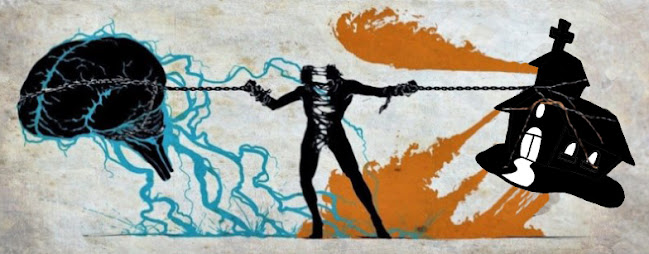
Who makes my life-decisions for me ?

January 18, 2026
Today’s Gospel speaks of Jesus as the CHOSEN one, the one who baptizes with the Spirit. It is clearly in harmony with the first reading which speaks of somebody who would become the light to the nations, and the second reading which speaks of all being sanctified through Christ.
Such a ‘chosen one’ or the long-awaited prophesied one, gives his followers something more than just any other charismatic leader. Such a leader then becomes someone we can follow without thinking, without having to second-guess our choices, because after all he is the chosen one, the one who was always meant to come and show us the way.
Placing someone on a pedestal is the oftentimes common human response to any person who is considered extraordinary, to one who has charisma, who can somehow see ‘beyond’ what the rest of us can see, who has deep insight, who can motivate people to go far beyond themselves, and the like. It is said that Nehru, the first prime minister of India, once told Richard Attenborough, who wanted to make a film about Gandhi, not to deify him as that was something that could easily happen in India where great men are often turned into gods. This had clearly happened in the case of Siddhartha Gautama, the man who became the Buddha, who is now known by one sect of Hindus as the ninth avatar of Vishnu (one of the three who constitute the Ultimate Reality in Hinduism), even though Buddha himself was clearly against caste and ritual sacrifices which are a staple of Vedic Hinduism. Even today, in India, there are many who are considered Bhagwans, a term that is often translated as ‘gods’ though it does not have the same connotation as ‘ultimate reality’ that is understood in the Judeo-Christian-Islamic sense, or even in the sense of the Nirankar ('without form') Brahman of the Hindu tradition. I am right now in Jharkhand, a predominantly tribal state in India, where one of their historical and iconic leaders, is no more just Birsa Munda, but Bhagwan Birsa Munda. In the mono-theistic Christian tradition since nobody else can be God, such people are called saints, who although not 'gods', often seem to garner exactly the same kind of blind devotion.
Today we even have political leaders being almost deified. Thus there is apparently a belief held by some extremely conservative Christians in the USA that Trump was specifically ‘annointed’ or ‘chosen by God’ as a ‘second Messiah’, for the special purpose of restoring America to its allegedly ‘Christian roots’ and to protect believers. In India, there is a small group of Hindutva supporters of the Prime Minister Modi, who speak of him as one of the avatars or incarnations of Vishnu, like Ram and Krishna.
What is at the root of this common tendency to deify people? The reality is that when we feel that we do not have control of our own lives, when we need a saviour, when we don’t know what exactly we should do, we have the strong tendency to deify those who somehow seem to offer an anchor to our lives. We are seeking meaning and hope. And the one who can give us that, somehow becomes a god-like figure in our lives.
But is there any downside to what we can call this kind of deification? Giving much reverence to such people may or may not be justified, but what is certainly dangerous, and a danger that many of us easily fall into, is when such reverence leads to an abdication of responsibility - a responsibility to think and choose for ourselves. This danger of abdicating responsibility was clearly seen in what is called the Nuremberg defence (during the trials against the Nazi leaders after World War II), a defence that was not accepted when the judges ruled that ‘superior orders’ weren’t an excuse when the order was clearly illegal or immoral. Since this was a principle that the Allies, including the USA, clearly supported in what was known as the London Charter, it would be interesting to see whether the military chiefs of the USA will remember this principle if Trump asks them to forcibly take over Greenland. Unlikely perhaps, precisely because we also know that the Pentagon is investigating Senator Mark Kelly, a highly decorated former US Navy Captain, and a few other Democrats, for urging military service members to refuse ‘illegal orders’. In India we have followers of certain god-men who are so blindly committed to them, that even when some of these god-men have been convicted in courts of multiple offences, including that of rape and murder (e.g. Asaram Bapu and Gurmeet Ram Rahim Singh), there are those who will still follow such persons blindly, and do whatever they tell them to do.
This dangerous tendency of human beings to hand over responsibility to another is deeply grounded in our fear of not knowing enough, not wanting perhaps to take the trouble to find out for ourselves, and perhaps importantly in not wanting to take the responsibility of difficult choices on ourselves. We do this in our everyday life also - like when we want to buy a mobile phone. Because we believe we do not know which phone is good, we either go with an expensive brand, because we blindly trust that brand, or ask someone in our family or friend circle to choose the phone for us. This may be acceptable for inconsequential things like mobile phones. But is it OK to hand over responsibility when dealing with basic decisions about how we want or ought to live our lives?
And yet, somehow, some of us tend to do just that, using the teachings of the New Testament, and of the Church, as the prop on which we base our lives and avoid responsibility - refusing to question them even when we need to. The history of theological reflection in all religions, including Christianity, is the history of those who would think for themselves when they found that a particular teaching or understanding of religion did not harmonize with their own experiences and/or the growth in human knowledge. So for example at the first ever Council of the Church, this is what they taught: It seemed good to the Holy Spirit and to us not to burden you with anything beyond the following requirements: You are to abstain from food sacrificed to idols, from blood, from the meat of strangled animals and from sexual immorality. (Acts 15:28-29). So this was what they felt, was the absolute minimum that all disciples of Jesus should follow. However over the years, the teachings not to partake of blood, or of the meat of strangled animals have been quietly shelved, - even though there are still some sects which refuse blood transfusions even if a person is in, danger of death without it, and others who refuse ‘strangled’ animal food, (e.g. Jehovah’s Witnesses and the Armenian Apostolic Church respectively). Similarly, the prohibition not to eat the food given to idols (such food is known as ‘prasaad’ in India) has also been shelved by many Christians in India, including members of the clergy, - a ‘shelving’ that seems to be implicitly supported by Pope Francis who clearly taught that the many major religions we have today are different pathways to God (September 2024). So three out of the four minimal moral requirements of that Council have been done away with - a Council at which apparently all the Apostles were present, and at which, as the above quoted verses from Acts makes clear, they believed that they were being guided by the Holy Spirit. And why ? -precisely because the Church, led by its theologians, chose to question them.
It would be important, then, to ask ourselves, how much are we willing to take responsibility for our own moral or other life decisions, and how much do we prefer to hand over responsibility to other ‘gods’.
First Reading: Isaiah 49:3, 5-6
And he said to me, “You are my servant,
Israel, in whom I will be glorified.”
4 But I said, “I have labored in vain;
I have spent my strength for nothing and vanity;
yet surely my cause is with the Lord
and my reward with my God.”
And now the Lord says,
who formed me in the womb to be his servant,
to bring Jacob back to him,
and that Israel might be gathered to him,
for I am honored in the sight of the Lord,
and my God has become my strength—
he says,
“It is too light a thing that you should be my servant
to raise up the tribes of Jacob
and to restore the survivors of Israel;
I will give you as a light to the nations,
that my salvation may reach to the end of the earth.”
Second Reading: 1 Corinthians 1:1-3
Paul, called to be an apostle of Christ Jesus by the will of God, and our brother Sosthenes,
To the church of God that is in Corinth, to those who are sanctified in Christ Jesus, called to be saints, together with all those who in every place call on the name of our Lord Jesus Christ, both their Lord and ours:
Grace to you and peace from God our Father and the Lord Jesus Christ.
Gospel: John 1:29-34
The next day John saw Jesus coming toward him and declared, “Here is the Lamb of God who takes away the sin of the world! This is he of whom I said, ‘After me comes a man who ranks ahead of me because he was before me.’ I myself did not know him, but I came baptizing with water for this reason, that he might be revealed to Israel.” And John testified, “I saw the Spirit descending from heaven like a dove, and it remained on him. I myself did not know him, but the one who sent me to baptize with water said to me, ‘He on whom you see the Spirit descend and remain is the one who baptizes with the Holy Spirit.’ And I myself have seen and have testified that this is the Chosen One.”

Comments
Post a Comment