It's a God-eat-God world !

January 25, 2026
Today’s second reading gives us a glimpse into the internal divisions among the members of the early Church - a period when many of those who walked with Jesus were still alive. This was not the only such passage iin the New Testament. We find other passages too that speak of divisions and quarreling in the early Church (1 Cor 3:3-4, Galatians 5:19-21). In Ephesians (4:29-31) Paul exhorts the Christians to put away anger, clamor and bitterness. And as I have mentioned in previous blogs there was even dissension between Peter and Paul with the latter calling the leader of the Apostles a hypocrite. (Galatians 2:11-14). Furthermore, there is a passage in which we have a discussion on how careless talk and gossip cause disturbances (James 3:5), indicating that this too was going on in the early Church, while there is a reference to those who cause dissensions in the letter to the Romans (Rom 16:17-18).
These divisions continued over the centuries so that today we have 356 member Churches in the World Council of Churches WCC, with the Catholic Church not being a member, but having the status of observer. And in the light of these many divisions, and acknowledging its own sin in this regard, the Catholic Church too has taken up the question pithily posed in the second reading today: Is Christ divided? and spoke of the ‘scandal’ of such divisions (Pope Francis), and that such a situation ‘openly contradicts the will of God’ (Vatican 2, Unitatis Redintegratio).
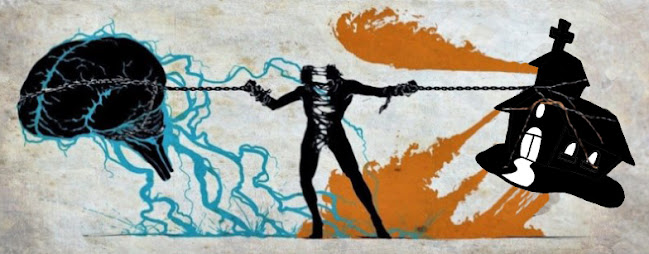
What we perhaps need to reflect upon is that almost all the divisions among Christians, between Christians and other religions, and between different religions too, are primarily focussed on what I have in earlier blogs called the ‘vertical’ dimension of our faith, and not on the ‘horizontal’ aspects. By the vertical dimensions of our faith, I am referring to our different understandings of God, or of the founder of our faith, or of God’s ways of working with human beings, or our ways of praying or conducting rituals and the like, as opposed to ‘horizontal’ aspects which refer to how we are called to live in relationship with other human beings. And based on our different understandings of these vertical dimensions, we seem to splinter into a myriad groups, even to the point of condemning, and, when we can, even destroying others who disagree with us. So the Catholic Church will set up the Inquisition to judge condemn and execute those who disagreed with its official teaching; Muslims and Christians will go to war with each other over the centuries because of their different understandings of who Jesus is and who Mohammad is; and Hindutva groups today will go around lynching those who sell and eat beef, because of the ‘divinity’ of the cow, and so on and so forth.
And yet mystics in all these religions and sects seem to have had remarkably similar experiences of God. These similarities include one or more of the following characteristics - the experience of Oneness where the distinction between the self and the divine dissolves; an Ineffability which means these experiences are often described by them as impossible to fully express in words; a Noetic quality which means they feel they have gained a direct experience of truth that is not accessible through ordinary human reasoning; a loss of Ego, and a general universal love and compassion.
Rumi a Sufi mystic wrote: ‘’I tried to find him on the Christian cross, but he was not there. I went to the Kaaba in Mecca, but he was not there either… I looked in my heart and there he was’’. Meister Eckhart, a Christian mystic, wrote: ‘’I pray God to quit me of God, for the undivided Godhead is my being and my nature’’. Kabir, an Indian mystic, revered by both Hindus and Muslims, wrote: ‘’Oh servant, where do you seek me? Lo, I am beside you. I am neither in the temple nor in the mosque. I am neither in Kaaba nor in Kailash. I am with you always.’’
Perhaps Aurobindo, one who based much of his teaching on the Hindu UPANISHADS, gave us a good insight into how the differences in our ‘vertical’ religious beliefs come about when he wrote: ‘Even as one Fire has entered into the world, but shapes itself to the form it meets, so there is one Spirit within all, but it shapes itself form to form.’ So it is the shape of our own vessel, our own limited human differences, our backgrounds, our cultures, our individualities, that ‘create’ the differences that we see, and defend so passionately. It is like the wine glass, the tea cup and the test-tube arguing passionately as to the true shape of water - each insisting that that little bit of the reality that each holds encompasses all of the truth about the shape of water. Perhaps, that is why Paul wrote: For Christ did not send me to baptize, but to preach the gospel. In other words I was not sent to convert you to my side, but to share with you my experience of the good news that Jesus brought to us. That is all. And that is sufficient.
First Reading: Isaiah 8:23 – 9: 3
Nevertheless, there will be no more gloom for those who were in distress. In the past he humbled the land of Zebulun and the land of Naphtali, but in the future he will honor Galilee of the nations, by the Way of the Sea, beyond the Jordan—
The people walking in darkness
have seen a great light;
on those living in the land of deep darkness
a light has dawned.
You have enlarged the nation
and increased their joy;
they rejoice before you
as people rejoice at the harvest,
as warriors rejoice
when dividing the plunder.
For as in the day of Midian’s defeat,
you have shattered
the yoke that burdens them,
the bar across their shoulders,
the rod of their oppressor.
I appeal to you, brothers and sisters, in the name of our Lord Jesus Christ, that all of you agree with one another in what you say and that there be no divisions among you, but that you be perfectly united in mind and thought. My brothers and sisters, some from Chloe’s household have informed me that there are quarrels among you. What I mean is this: One of you says, “I follow Paul”; another, “I follow Apollos”; another, “I follow Cephas”; still another, “I follow Christ.”
Is Christ divided? Was Paul crucified for you? Were you baptized in the name of Paul? I thank God that I did not baptize any of you except Crispus and Gaius, so no one can say that you were baptized in my name. (Yes, I also baptized the household of Stephanas; beyond that, I don’t remember if I baptized anyone else.) For Christ did not send me to baptize, but to preach the gospel—not with wisdom and eloquence, lest the cross of Christ be emptied of its power.
Gospel: Mathew 4:12-23
When Jesus heard that John had been put in prison, he withdrew to Galilee. Leaving Nazareth, he went and lived in Capernaum, which was by the lake in the area of Zebulun and Naphtali— to fulfill what was said through the prophet Isaiah:
“Land of Zebulun and land of Naphtali,
the Way of the Sea, beyond the Jordan,
Galilee of the Gentiles—
the people living in darkness
have seen a great light;
on those living in the land of the shadow of death
a light has dawned.”
From that time on Jesus began to preach, “Repent, for the kingdom of heaven has come near.”
As Jesus was walking beside the Sea of Galilee, he saw two brothers, Simon called Peter and his brother Andrew. They were casting a net into the lake, for they were fishermen. “Come, follow me,” Jesus said, “and I will send you out to fish for people.” At once they left their nets and followed him.
Going on from there, he saw two other brothers, James son of Zebedee and his brother John. They were in a boat with their father Zebedee, preparing their nets. Jesus called them, and immediately they left the boat and their father and followed him.
Jesus went throughout Galilee, teaching in their synagogues, proclaiming the good news of the kingdom, and healing every disease and sickness among the people.

Comments
Post a Comment