When followers corrupt the leader !!!

March 8, 2026
The first reading of today speaks of the first time that Moses, at the command of God, strikes a rock and gets water for the Israelites. Soon after they escaped from Egypt, the Israelites had started complaining; “Why did you bring us out of Egypt, to kill us and our children and livestock with thirst?”
In the Books of EXODUS and NUMBERS, we find many similar instances of complaining by the Israelites as they wandered for years before settling down in Canaan (Israel today). But there is one story found in Numbers that is remarkably similar to the story found in today’s first reading, and yet is different in crucial ways. In this second story, which also takes place at a place called MERIBAH, the Israelites complain again: Why have you brought the assembly of the Lord into this wilderness for us and our livestock to die here? Why have you brought us up out of Egypt to bring us to this wretched place? It is no place for grain or figs or vines or pomegranates, and there is no water to drink (Numbers 20:4-5)
What happens next, however, in this second story is significantly different. Yahweh tells Moses to ‘command the rock … to yield its water’, but Moses, in anger with the Israelites for their constant complaints despite all that Yahweh has done for them, strikes the rock twice, and water flows out. But the Bible story goes on to tell us that Yahweh is deeply displeased with Moses, and as punishment, tells him that he, Moses, will never enter the promised land. Why was Yahweh displeased with Moses who did exactly what he had done a previous time, and in any case, in this case too, the water had flown out?
This is a good example to show how the Bible is the story of the journey of the chosen people, a pilgrimmage in their relationship with Yahweh. The first reading of today happens around the beginning of their journey in the desert, while the second reading about striking the rock from which water flows occurs after 40 years when they are about to enter Canaan. And much has changed.
Most importantly, Moses’ role has changed. In the first instance in Exodus 17, Moses is a mediator, and cries out to God for help, and God responds with patience and care. However, after 40 years of this role, Moses has begun to think he himself is special, and not just a voice between the Israelites and Yahweh. He sees himself now as a veteran leader and master of the Israelites,(imagine a person who has been head of a country for 40 years!!!) and so he speaks in anger to his subordinates, ‘’Listen you rebels, …’’ (Numbers 20:10). He has even come to believe that it is he who works the miracle, ‘’Shall we bring water for you….’’.(Numbers 20:10). And in his hubris, though God only asks him to command the rock, Moses, remembering his old way of functioning, strikes the rock twice. After all it has worked in the past. God still grants the water, but God punishes Moses for claiming authority to do as he wishes, and holy enough to work a miracle, all the while forgetting that he is only a mediator between Yahweh and the people. The difference is this: In Exodus, Israel and Moses are immature, and so God forgives easily. In Numbers, while the community is still immature, leaders are judged more strictly. As Jesus teaches: “From everyone who has been given much, much will be demanded” (Luke 12:48).
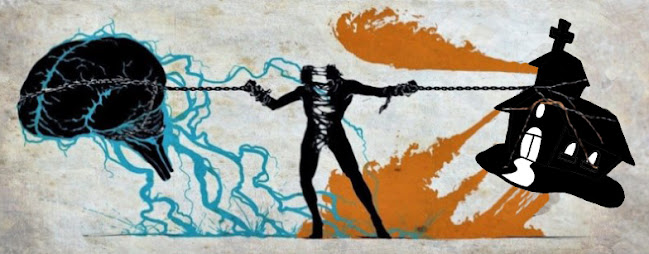
So the second story is not about the disobedience or ingratitude of the Jews but about leadership failure. But while the leader is of course responsible for his/her own failure, perhaps we should also reflect on the role that the rest of us play in contributing to this leadership failure.
There is an old Sanskrit poem, called Sukanas-opdesa, which is a poem that offers advice to a prince-in-waiting, speaking to him of what happens to leaders when they get power. It speaks of the arrival of power as the beginning of the slippery slope of self-destruction, the moment when judgement begins to fail. And the poem explores the reason for this by teaching the young prince that this happens because the environment that surrounds such a leader, (i.e. the people who bask in his/her power and by extension share some power themselves), feed into this self-destruction. For it becomes important to the ‘courtiers’ surrounding the leader that as the leader increases in power, he must not be seen as doing anything wrong. And so, in order that nothing he does is seen as wrong, they re-brand or re-name his acts (shades of Orwell’s novel 1984). When words change in meaning, then what is wrong begins to be seen as right. Surrounded by this new language, the one with power begins to believe that he has transcended ordinary moral accounting, so that mistakes stop looking like mistakes, criticism is seen as insolence and backstabbing, and counsel that goes against what the one in power wants is seen as an insult to his/her intelligence. All this leads to the leader’s perception narrowing, and restraint gradually exiting the room, - all because the system surrounding such a leader begins to reward his behaviour, whatever it is. The final corruption then, says the poem, is not greed or pleasure, but delusion. The delusion can become so strong that such people begin to imagine themselves as something more than human, almost as partial incarnations of gods. As a result, such leaders begin to see their commands as blessings for others, and their very presence as purifying, and a great benevolence to others. We don’t have to look far to see examples of this. In this month itself, it was reported that a military commander in the USA, while prepping those under his command for the Iran war, spoke of Trump as being one who was ‘annointed by Jesus', and the war itself as part of God’s final plan for the world, as foretold in the Book of Revelation (March 3, 2026, report by Military Religious Freedom Foundation (MRFF).) In India too, Prime Minister Modi, in one of his interviews said, very seriously, that though he had earlier assumed that his was a normal biological birth, he had come to believe that he was not ‘born biologically’ but was ‘sent by God’ to fulfill a divine purpose (Interview with NEWS18, May 2024).
So while it is easy to blame the leaders for being corrupted by power, we need to remember that it is we, ordinary followers, who create, or at least support, this delusion for our leaders, whether political, religious or otherwise. Peter, as he objected strenuously to Jesus attempting to wash his feet, is a good example of how we contribute to the corruption of our leaders. And it is the same with us. I remember an incident when I was a Jesuit seminarian and went home for a visit. Here I was, not yet 20 years old, with less than a year of seminary training, and one who had no knowledge of life or any great wisdom, - and yet because I was wearing a cassock, my opinions on religious and sometimes even other matters were treated with great respect by people much older, much wiser and much holier than me. And if I had continued as a Jesuit and been ordained a priest, and continued to be treated like that for fifteen or twenty years, imagine what was likely to have developed in me - an unstated internalization that because I was a religious or priest, my knowledge, wisdom and words had great spiritual value. As a priest once told me: ‘’When people ‘incense’ you regularly, then you start to believe that you are somebody special, somebody close to God, and therefore worthy of veneration’’.
Like Moses, this is a delusion that many leaders, political, religious or otherwise, tend to easily labour under - as seems obvious when we see how some of those who have power tend to behave even today. They forget what Jesus told Pilate when the latter boasted that he had the power to release him or crucify him: “You would have no power over me unless it had been given you’’. And so they tend to forget that they have no power except what others have given them. Jesus understood the very real danger of this when, despite their strenuous objections, he washed the feet of his disciples and then taught them, “You call me ‘Teacher’ and ‘Lord,’ and rightly so, for that is what I am. Now that I, your Lord and Teacher, have washed your feet, you also should wash one another’s feet.’’
First Reading: Exodus 17: 3-7
But the people thirsted there for water, and the people complained against Moses and said, “Why did you bring us out of Egypt, to kill us and our children and livestock with thirst?” So Moses cried out to the Lord, “What shall I do for this people? They are almost ready to stone me.” The Lord said to Moses, “Go on ahead of the people and take some of the elders of Israel with you; take in your hand the staff with which you struck the Nile and go. I will be standing there in front of you on the rock at Horeb. Strike the rock, and water will come out of it, so that the people may drink.” Moses did so, in the sight of the elders of Israel. He called the place Massah and Meribah, because the Israelites quarreled and tested the Lord, saying, “Is the Lord among us or not?”
Second Reading: Romans 5: 1-2, 5-8
Therefore, since we are justified by faith, we have peace with God through our Lord Jesus Christ, through whom we have obtained access to this grace in which we stand, and we boast in our hope of sharing the glory of God. And not only that, but we also boast in our afflictions, knowing that affliction produces endurance, 4 and endurance produces character, and character produces hope, and hope does not put us to shame, because God’s love has been poured into our hearts through the Holy Spirit that has been given to us.
For while we were still weak, at the right time Christ died for the ungodly. Indeed, rarely will anyone die for a righteous person - though perhaps for a good person someone might actually dare to die. But God proves his love for us in that while we still were sinners Christ died for us.
Gospel: John 4: 5-42
So he came to a Samaritan city called Sychar, near the plot of ground that Jacob had given to his son Joseph. Jacob’s well was there, and Jesus, tired out by his journey, was sitting by the well. It was about noon.
A Samaritan woman came to draw water, and Jesus said to her, “Give me a drink.” (His disciples had gone to the city to buy food.) The Samaritan woman said to him, “How is it that you, a Jew, ask a drink of me, a woman of Samaria?” (Jews do not share things in common with Samaritans.) Jesus answered her, “If you knew the gift of God and who it is that is saying to you, ‘Give me a drink,’ you would have asked him, and he would have given you living water.” The woman said to him, “Sir, you have no bucket, and the well is deep. Where do you get that living water? Are you greater than our ancestor Jacob, who gave us the well and with his sons and his flocks drank from it?” Jesus said to her, “Everyone who drinks of this water will be thirsty again, but those who drink of the water that I will give them will never be thirsty. The water that I will give will become in them a spring of water gushing up to eternal life.” The woman said to him, “Sir, give me this water, so that I may never be thirsty or have to keep coming here to draw water.”
Jesus said to her, “Go, call your husband, and come back.” The woman answered him, “I have no husband.” Jesus said to her, “You are right in saying, ‘I have no husband,’ for you have had five husbands, and the one you have now is not your husband. What you have said is true!” The woman said to him, “Sir, I see that you are a prophet. Our ancestors worshiped on this mountain, but you say that the place where people must worship is in Jerusalem.” Jesus said to her, “Woman, believe me, the hour is coming when you will worship the Father neither on this mountain nor in Jerusalem. You worship what you do not know; we worship what we know, for salvation is from the Jews. But the hour is coming and is now here when the true worshipers will worship the Father in spirit and truth, for the Father seeks such as these to worship him. God is spirit, and those who worship him must worship in spirit and truth.” The woman said to him, “I know that Messiah is coming” (who is called Christ). “When he comes, he will proclaim all things to us.” Jesus said to her, “I am he, the one who is speaking to you.”
Just then his disciples came. They were astonished that he was speaking with a woman, but no one said, “What do you want?” or, “Why are you speaking with her?” Then the woman left her water jar and went back to the city. She said to the people, “Co me and see a man who told me everything I have ever done! He cannot be the Messiah, can he?” They left the city and were on their way to him.
Meanwhile the disciples were urging him, “Rabbi, eat something.” But he said to them, “I have food to eat that you do not know about.” So the disciples said to one another, “Surely no one has brought him something to eat?” Jesus said to them, “My food is to do the will of him who sent me and to complete his work. Do you not say, ‘Four months more, then comes the harvest’? But I tell you, look around you, and see how the fields are ripe for harvesting. The reaper is already receiving wages and is gathering fruit for eternal life, so that sower and reaper may rejoice together. For here the saying holds true, ‘One sows and another reaps.’ I sent you to reap that for which you did not labor. Others have labored, and you have entered into their labor.”
Many Samaritans from that city believed in him because of the woman’s testimony, “He told me everything I have ever done.” So when the Samaritans came to him, they asked him to stay with them, and he stayed there two days. And many more believed because of his word. They said to the woman, “It is no longer because of what you said that we believe, for we have heard for ourselves, and we know that this is truly the Savior of the world.”

Comments
Post a Comment